10 Wet Markets Worth Getting Up Early For
The ten markets I keep going back to — where to find the best tofu, the freshest fish, and the small details that make each one feel like it belongs to its neighbourhood.
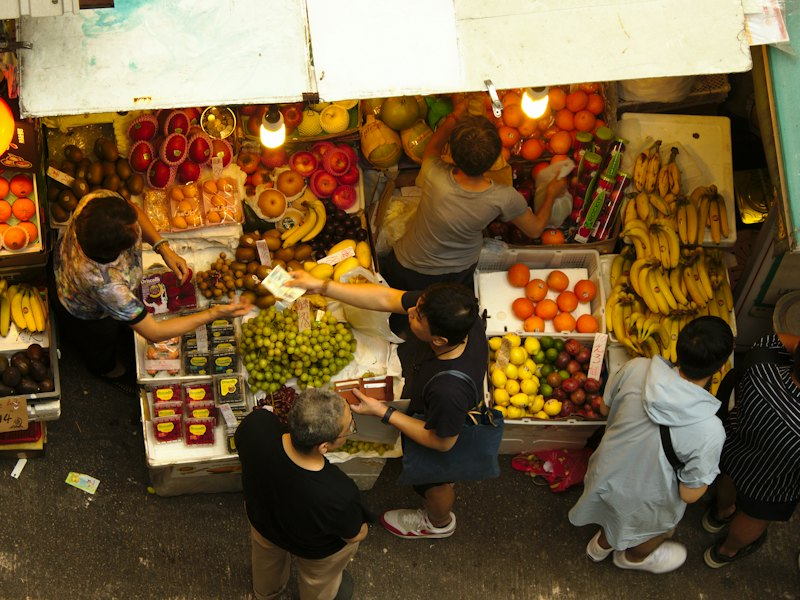
I’ve been shopping at wet markets in Shanghai for years, and these are the ten I keep going back to — from polished-up renovators like Wuzhong to old-school stalls that still look like they did twenty years ago.
Wuzhong Market 乌中市集
If you’ve read anything about Shanghai’s wet markets, you’ve seen Wuzhong. It went through a renovation a few years back and came out looking almost too good — green tiles, neat signage, produce arranged like a still-life. But once you start shopping, you realise it works. The egg lady knows her stock. The fish counter smells like the sea. It’s the market I send people to when they tell me wet markets make them nervous.
The egg seller on the ground floor is the reason I go. She’ll split a tray into half-dozens without being asked.
Spring means xiāngchūn (Chinese toon shoots) at the entrance — one of the most Shanghai things you can eat, and the season is short.
The dry-goods counter upstairs sometimes has sumac and za’atar. I don’t know why. I don’t question it.
Tianshan Wet Market 天山菜市场
Tianshan is what I think of when someone says “wet market” without adjectives. Big, loud, doesn’t care whether you think it’s picturesque. People come with lists and leave with bags. The aisles are narrow enough that you’ll bump shoulders with someone carrying a live chicken.
Stall A-12. Live shrimp, river fish, cleaned on the spot. That’s all you need to know.
A grandmother near the north entrance makes dumpling wrappers by hand. She sells out by eight.
Don’t drive. Nowhere to park and Maotai Road traffic will make you question your choices.
Caoyang Market 曹杨菜市场
Caoyang is in one of the older parts of Putuo, and you can feel it. The vendors and regulars have been there for decades. When I first started going, a tofu seller asked me where I was from — and then remembered, every time after, that I was “the one from England who likes the soft tofu.” That’s Caoyang.
The stall with the red lantern does pre-marinated hóngshāo ròu packs. Take one home, add water, done.
Just outside the east gate, a shop does hot salted soy milk in the morning. Proper Shanghai breakfast.
Nobody speaks much English. A calculator and a point will get you through.
Wukang Market 武康菜场
Wukang is the market that matches its street — refined, heritage buildings, good cafés. It’s small, but the produce is chosen with care and the layout makes sense. I come here when I want to enjoy the shopping, not just get through it.
The tofu stall on the left as you walk in. Silken tofu so smooth it barely holds its shape. They also do smoked strips for lazy dinners.
A florist at the back stocks things you won’t find on Anfu Road. Good for gifts.
Go on a weekday afternoon. Weekends are fine, but the quiet is better.
Changning Market 长宁菜场
Changning is the easy one — spacious, organised, and you can push a stroller through it without wanting to cry. That sounds small, but if you’ve tried navigating a crowded market with a toddler, you know it isn’t. I come here when I want the produce without the drama.
The couple at F-3 will scale and fillet whatever you pick, and tell you if the fish isn’t good that day. Trust them.
There’s a small play corner near the exit. Not fancy, but it buys you ten minutes.
Autumn means wild mushrooms from Yunnan. Not cheap, but worth it.
Xianxia Wet Market 仙霞菜市场
Xianxia sits in a part of Changning with a big Japanese community, and you can see it in the market — salmon next to carp, shimeji next to shiitake, a small section of Japanese condiments I didn’t expect. It’s the one I go to when I’m cooking something that doesn’t know what country it’s from.
The fishmonger on the back wall has salmon, tuna, and scallops. Ask if it’s sashimi-grade — he’ll tell you straight.
Matsutake in autumn. Shimeji all year. Both worth the detour.
Wednesday mornings, there’s sometimes a volunteer who speaks Japanese. Lovely.
Wuning Market 武宁菜市场
Wuning got a facelift recently — brighter, cleaner, easier to navigate. But the thing that makes it worth the trip is the halal section. There’s a significant Muslim community here, and the market reflects it: properly hand-slaughtered lamb and fresh lāmiàn noodles pulled in front of you.
Stall H-1. Lamb and beef, hand-slaughtered. The guy will tell you which cut for kebabs and which for a braise.
The noodle station makes lāmiàn to order. Watch them pull the dough — worth the visit on its own.
There’s a scooter and bike parking area behind the market that nobody seems to know about. Now you do.
Hongqiao Market 虹桥菜市场
Hongqiao is small — you can walk through it in five minutes if you’re not shopping. But the poultry is good, the fruit is good, and the leafy greens are some of the freshest I’ve seen at that price. Not a destination market — a neighbourhood one, and that’s what makes it good.
The chicken vendor near the east entrance. Yellow-skinned, genuinely free-range. You can taste the difference.
Spring means mǎlántou and qiūkuí. If you don’t know what those are, buy them and find out.
Can’t read the price? Calculator, type a number, point. Works every time.
Tilanqiao Market 提篮桥菜市场
Tilanqiao is in Hongkou, in what used to be the old Jewish quarter, and it still has a slightly old-world feel. This is the market for preserved things — pickles, fermented vegetables, dried fish — the ingredients that make Chinese home cooking taste like Chinese home cooking. I come here to stock a pantry, not just a fridge.
The wooden-barrel stall does pàocài — fermented vegetables. The sour green beans are the ones I always buy.
If you don’t recognise a fish, ask. You’ll get an answer in Mandarin and hand gestures. It’ll make sense.
Auntie Zhang’s jiānbǐng cart outside. Get there before nine. That’s all I’ll say.
Lancun Road Market 蓝村路菜市场
Lancun Road is in Pudong — the market I’d send someone to if they lived over there and didn’t want to cross the river. A mix of locals and expat families; you’ll hear English, Mandarin, sometimes French in the same aisle. Not glamorous, but honest, and the kind of market that makes a neighbourhood feel like one.
The dried-goods aisle sometimes has Filipino dried mango, Thai curry paste, Vietnamese rice paper. Small section, but it’s there.
After 4pm on weekdays, seafood gets marked down — not because it’s bad, because they want to close.
Mrs Chen, organic vegetable section. Patient, kind, and she’ll explain what to do with anything you point at.
I keep a list on my phone of things I’ve learned at these markets. The fish guy at Tianshan who always throws in ginger. The way Wukang smells like fresh tofu in the morning. The egg lady at Wuzhong who started keeping omega-3 eggs because I asked once. A wet market isn’t just where you buy food in Shanghai — it’s where you become part of a neighbourhood.
Got a market I should know about?
A stall that does something special? A seasonal find I missed? Tell me. This guide gets updated when readers send in tips.
Share a tip →More from Shanghai Directory
Things to Do · 20 min
50 Free Things To Do in Shanghai (That Are Actually Worth Your Time)
Shanghai is ranked one of the most expensive cities in the world — but some of its best experiences cost nothing. 50 genuinely free things to do, from iconic first-time experiences to hidden local favourites.
Things to Do · 10 min
China's National Day: What Golden Week Means in Shanghai — and How to Survive It
Every 1 October, China marks the founding of the People’s Republic of China. In Shanghai, that means flags along the streets, packed railway stations, illuminated skylines and the beginning of one of the biggest travel weeks on earth.
Things to Do · 8 min
The best things to do in Shanghai during Golden Week
Six relaxed, crowd-aware ways to enjoy Shanghai during the October National Day holiday — from sunrise at the Bund to the Propaganda Poster Art Centre, French Concession walks, riverside cycling and smaller parks.
Comments
Be the first to share your thoughts.