Jiaotong University: Students, Small Cozy Restaurants, and Tree-lined Streets
Shanghai's quietly brilliant west side — film, pies, wine and hidden villa streets. For coffee hunters, architecture lovers, pie obsessives, wine drinkers, university wanderers, and anyone looking for a slower, more local Shanghai day.
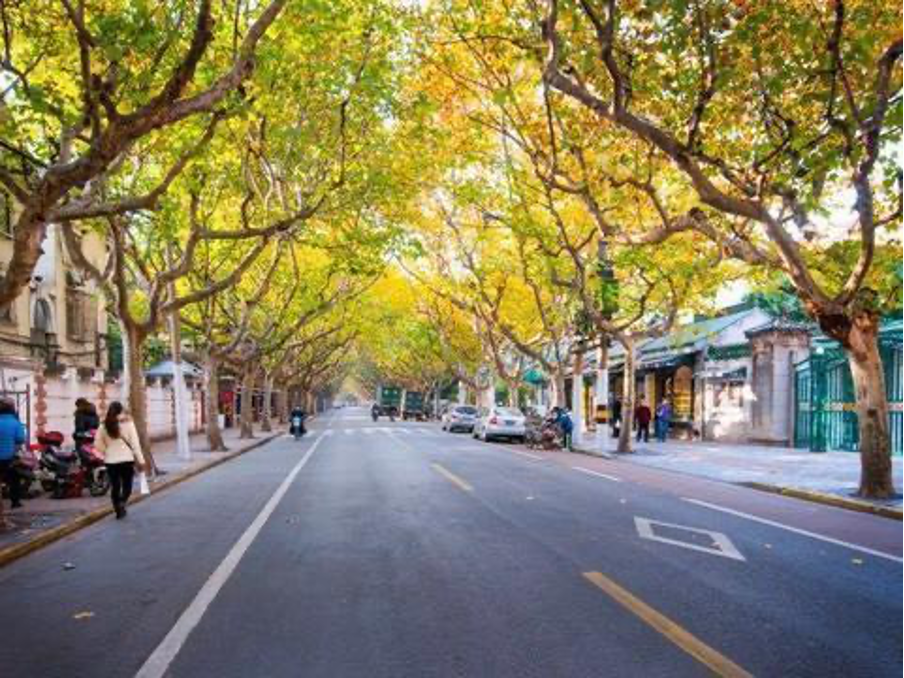
The neighborhood around Jiaotong University has something special. It's the type of neighborhood that rewards you for staying longer than planned.
Heading out of Jiaotong University station leads to the kind of Shanghai day where a "quick coffee" becomes a three-hour walk, where a lunch stop turns into wine at sunset, and where the best moments can be found on the walk between destinations.
Hidden between the leafy villa streets of Xinhua Road, the student energy surrounding Shanghai Jiao Tong University, the increasingly creative Panyu Road and Fahuazhen Road pocket, and the beautifully restored Columbia Circle, this corner of west Shanghai feels like a city within a city.
It has everything you could want from a great Shanghai neighborhood:
- historic villas hidden behind French plane trees
- independent cafés and bakeries
- old residential lanes
- university culture
- creative spaces
- excellent casual dining
- wine bars where nobody is rushing you out
Jiaotong University is less polished than the Bund, less crowded than Jing'an, and less "Instagram/Xiaohongshu Shanghai" than the French Concession. And that's exactly what makes it special.
The best way to experience the neighborhood is by walking aimlessly, not by a checklist. But if you need one, here you go:
- Start with coffee near the station
- Walk slowly through Xinhua Road
- Disappear into side streets
- Eat something you didn't plan to eat
- Open a bottle of wine
- Let the neighbourhood decide the schedule
Understanding the Jiaotong University Neighborhood
The area gets its name from one of Shanghai's most important academic institutions, Shanghai Jiao Tong University, one of China's oldest and most prestigious universities.
Founded in 1896 during the late Qing dynasty, the university has played an important role in Shanghai's development as a center for science, engineering, and innovation.
The Xuhui campus area has long brought a younger, more intellectual energy to this part of the city, acting as a useful contrast to the surrounding historic residential streets.
This creates one of the neighborhood's most appealing combinations: old Shanghai architecture + university life + modern independent businesses.
The streets around here were never designed as a tourist or business district. They evolved as residential neighborhoods, which means they still feel local and human. You get apartment compounds, small shops, old villas, local restaurants, and cafes sharing the same streets and alleys.
Your starting point is: Jiaotong University Metro Station (lines 10 and 11).
From here, the ideal walking route is: metro station → Xinhua Road (with a stop at the Shanghai Film Art Center) → Fahuazhen Road → Panyu Road (with a stop along Happiness Alley).
It is a full-day circuit:
- ☕ Coffee
- 🚶 Historic streets
- 🍝 Italian lunch
- 🍢 Yakitori
- 🥧 British pies
- 🍷 Wine
- 🏛 Architecture
And importantly: you can do all of it without getting into a DiDi.
Stopping at the Shanghai Film Art Center: Where Shanghai's Cinema Culture Meets Old Neighborhood Charm
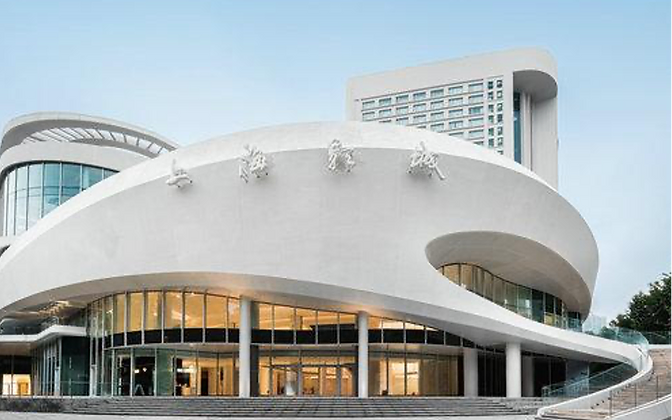 The Shanghai Film Art Center on Xinhua Road
After leaving the station and heading down Xinhua Road, your first stop should be the Shanghai Film Art Center.
At first glance, it looks like a normal cinema complex. But this building represents something bigger: Shanghai's long relationship with film.
Shanghai was one of Asia's earliest cinema capitals. During the 1920s and 1930s, the city became known as the "Hollywood of the East", producing some of China's most influential films and developing a sophisticated film culture that continues to shape the city today.
The Shanghai Film Art Center continues that tradition. It remains one of the city's important cinema venues, hosting mainstream releases, art films, screenings and cultural events.
But even if you are not catching a movie, the renovated complex has much more to offer inside, and it's a perfect starting point for exploring the neighborhood. Inside, you'll find coffee shops, a record store, a late-night bar, and a steakhouse (that's currently under construction as of August 2026).
The area around it is the meeting point between:
- the historic villas of Xinhua Road
- the creative energy of Panyu Road
- the quieter residential streets leading towards Columbia Circle
It's the perfect place to begin a slow Shanghai day.
Coffee First: Åre Lab Coffee
Inside the Shanghai Film Art Center, on the second floor past the theater entrance, begin the day with Åre Lab Coffee.
Recently opened, this is exactly the type of cafe that suits this neighborhood: thoughtful, design-conscious, and focused on good coffee without trying too hard.
The cafe has seats inside and out, so you can sit a while and enjoy. Grab a morning flat white before exploring, a quick espresso before a film, or a coffee reset halfway through a walking route.
For those in more of a hurry, % Arabica has an outdoor window on the first floor for quick grab-and-go coffee, while still maintaining the quality the neighborhood expects.
Åre Lab Coffee — Shanghai Film Art Center, 160 Xinhua Road, Changning District
Map links: Google Maps · Apple Maps · Baidu Maps
The Xinhua Road Walk: One of Shanghai's Most Underrated Streets
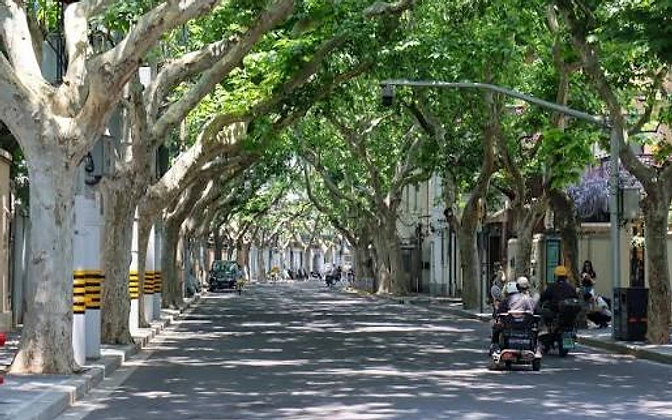 Tree-lined Xinhua Road
After coffee, begin your walk down Xinhua Road towards Dingxi Road. This is where the neighborhood reveals its beauty.
Many visitors know Shanghai's famous tree-lined streets in the former French Concession, but Xinhua Road offers something slightly different. It feels less curated and more residential, a place where people actually live rather than a backdrop built around tourism.
Xinhua Road is famous for:
- towering French plane trees
- hidden garden villas
- low-rise historic homes
- quiet lanes disappearing behind gates
- small neighbourhood businesses
The area developed heavily during Shanghai's concession era, when wealthy Chinese families, foreign residents, and professionals built homes away from the crowded city center.
One of the pleasures here is that you are never quite sure what you'll find behind the next corner: a 1930s villa, a tiny coffee shop, a neighborhood bakery, or simply a perfect quiet Shanghai street (or some combination of all).
As you walk, here are a few places to stop:
KORA and/or Pincle Coffee
Sitting next to each other, just a few steps away from the film center, are two newer places to Xinhua.
KORA is an African restaurant with Zambian dishes, West African dishes, a few fusion options, and hookah. Whether you're stopping for a quick meal or a few drinks and hookah, this unique restaurant showcases the diversity and inventiveness of the neighborhood.
Next door is Pincle Coffee, with mid-century modern furniture and baristas ready to make you a serious cup of coffee. Their large windows facing the street make for perfect traffic and people watching while sipping on your drink of choice.
Map links: Apple Maps · Amap
Hudec Garden: A Small Link to Old Shanghai
A stroll down Xinhua would not feel complete without appreciating Shanghai's architectural history, and Hudec Garden offers a small reminder of the city's famous European-influenced villa architecture.
The name references László Hudec, the architect behind some of Shanghai's most recognisable historic buildings, including the iconic Park Hotel. Hudec's work helped define Shanghai's unique early-20th-century architectural identity: a mixture of European design, Chinese influences, and the ambitions of a rapidly modernising city.
At Hudec Garden, you'll find a cafe with seating in the beautiful lawn and garden area, a florist, a small boutique shop, and a restaurant. It's not a huge attraction, but it's a place to slow down — and a reminder that some of Shanghai's best discoveries are hidden behind gates and unassuming alleys.
Map links: Apple Maps · Amap
FICS 365
FICS 365 is one of those areas that even those living locally might look over, but it's a destination that shouldn't be. Hidden down an alley is an oasis of bars, restaurants, cafes, and a small dog park.
The area has a lot to offer. Head down the alley and grab a coffee or a beer, watch the dogs play, and, if you're hungry, pick the restaurant that looks the most delicious.
Map links: Google Maps · Apple Maps · Baidu Maps
From Xinhua Road to Panyu Road: Where the Neighborhood Gets More Social
After exploring the quieter side of Xinhua Road, hop over to Fahuazhen Road and start heading back towards Panyu Road. This is where the mood changes. The villa-lined streets give way to a more energetic mix of:
- university students
- young professionals
- local, independent restaurants
- small bars and cafes
- creative businesses
- neighborhood regulars
The area around Panyu Road has become one of Changning's most interesting pockets because it sits somewhere between old Shanghai and the city's newer lifestyle culture.
Here, you won't be walking through a neighborhood designed for visitors. You'll be walking through somewhere where people live, work, eat and drink, where locals spend their evenings.
The center of this area is at the intersection of Fahuazhen and Panyu:
HUB 390
HUB 390 is a small lifestyle compound that captures the current direction of Shanghai's neighborhood scene: old spaces being reused for independent food, drink, and creative concepts.
Although it's not a huge compound, HUB 390 is perfect for a place to wander. Check what restaurants are busy, see what new opening has appeared, grab a pastry or a drink, meet your friends who can't agree where to eat.
Shanghai changes quickly, and places like HUB 390 benefit from that constant movement. The best strategy is to arrive curious, not with a plan.
Lunch Stop: Alimentari Piccolo
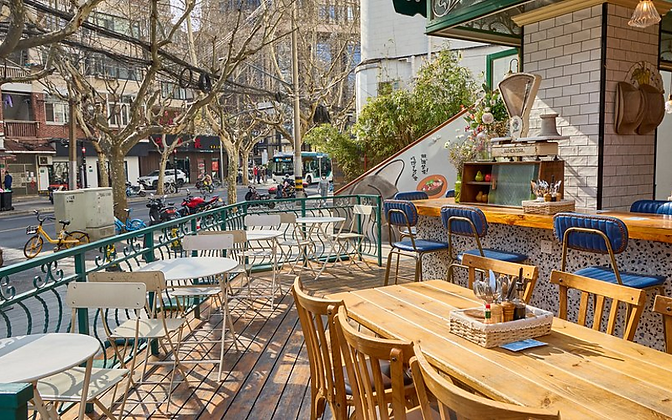 Outdoor patio seating at HUB 390
Located inside HUB 390, Alimentari Piccolo brings a little slice of Italian neighborhood dining to west Shanghai.
The concept is simple: good food, good wine, relaxed atmosphere. It combines the feel of an Italian deli with a casual restaurant — sandwiches, pasta, charcuterie and cheese plates, wine, easy-going lunches, early evening drinks.
The outdoor seating also makes it particularly pleasant during Shanghai's spring and autumn months, when the city is at its best.
Address: Room 103, HUB 390, 390 Panyu Road, Changning District, Shanghai
Best time to visit: Lunch, late afternoon aperitivo, or an early dinner before exploring the surrounding streets.
Map links: Google Maps · Apple Maps · Baidu Maps
The Panyu Road Yakitori Trail: Follow the Smoke
One of the neighborhood's, and HUB 390's, underrated strengths is the Japanese food. This area has developed a strong Japanese dining presence, particularly for yakitori.
If you walk along HUB 390's stretch along Panyu Road, there are three longstanding yakitori spots, and all are worth checking out. To choose, look for the place with:
- a busy counter
- charcoal smoke drifting outside
- small groups drinking beer
- chefs working behind the grill
That's where you'll find the magic. Shanghai's yakitori scene works because it suits the city's evening rhythm: not too formal, easy to share, great with drinks, and perfect after walking around.
Order:
- chicken thigh
- chicken skin
- tsukune (chicken meatball)
- mushrooms
- vegetables
- cold beer or a highball
Then suddenly the "quick snack" becomes dinner.
Happiness Alley (Xingfu Li): The Evening Begins Here
Continue towards Happiness Alley (Xingfu Li), which is just across from HUB 390. This small lane area is where this part of Changning becomes especially enjoyable after dark.
And the name itself feels fitting. "Xingfu" means happiness in Chinese, and while the area is not some grand historic landmark, it has become one of those small Shanghai lifestyle pockets where people naturally gather.
This is the type of place where:
- neighbours walk dogs
- friends meet after work
- restaurants spill onto the street
- people move between dinner and drinks without needing a taxi
It feels closer to a European neighbourhood street than a traditional shopping district.
There are numerous bars and restaurants to choose from. For classic British fare, head to Pie Society. For health eats, check out O'Mills. Needing a quick crepe? PAPITO Pancakes is there for you.
Map links: Apple Maps · Google Maps
Before and After Dinner: La Cava de Laoma
This is one of the neighborhood's strongest pairings with Happiness Alley. The idea is simple: wine first, dinner, then wine again.
La Cava has built a reputation around approachable international wines, particularly selections from regions such as Chile and Argentina.
But the appeal isn't just about the bottles. It's social: less "serious wine shop" and more "let's open something interesting and stay awhile." And it fits perfectly with this part of Changning.
Map links: Google Maps · Apple Maps · Baidu Maps
The Late-Night Backup: NB Soeng
Across from La Cava, near the east entrance to Happiness Alley, is an unassuming but incredible little restaurant. During the day, all you'll see is locked glass doors with plastic stools stacked high and a flattop grill hiding behind everything. But once night hits and the pedestrian traffic builds, the doors are unlocked, the stools are set out with a few tables, and it's open for business: NB Soeng.
It's a classic Shanghai second-dinner move. A handwritten menu, changing options of Chinese and fusion dishes, whatever beers they happen to have that night. Be adventurous; choose a plastic stool and experience late-night culinary excitement.
Final Tips for Exploring the Jiaotong University Area
Come Hungry
This neighborhood rewards people who do not plan every meal. The best day usually includes one planned meal, two accidental snacks, and a few drinks you didn't expect to order.
Weekdays and Weekends Feel Completely Different
Weekdays are quieter but with more university and local energy. Weekends have more cafe traffic, especially those cute enough for Instagram and Xiaohongshu. There will be more groups, especially around HUB 390 and Happiness Alley.
Spring and Autumn Are the Best Seasons
This neighborhood is built for walking. The French plane trees, old villas, and outdoor seating make it especially enjoyable when Shanghai's weather is comfortable.
Use Dianping for Times and the Newest Openings
Shanghai changes faster than any guidebook, and this neighborhood is no exception. Restaurants, cafes, and bars can disappear, move, or reinvent themselves overnight.
Do Not Treat It Like a Tourist Attraction
There's no checklist, no top-ten lists, no "completing" Jiaotong University. Its charm comes from the spaces in between: the tree-lined streets, the unexpected cafe, the old building behind a gate, the conversation that lasts longer than planned. If you need a tourist attraction, the Wukang Building isn't too far of a walk.
Explore more Shanghai neighbourhoods
Browse our full collection of neighbourhood guides — from Yanping Road and Wulumuqi Lu to North Shaanxi Road and the Former French Concession.
All articles →More from Shanghai Directory
Things to Do · 20 min
50 Free Things To Do in Shanghai (That Are Actually Worth Your Time)
Shanghai is ranked one of the most expensive cities in the world — but some of its best experiences cost nothing. 50 genuinely free things to do, from iconic first-time experiences to hidden local favourites.
Things to Do · 10 min
China's National Day: What Golden Week Means in Shanghai — and How to Survive It
Every 1 October, China marks the founding of the People’s Republic of China. In Shanghai, that means flags along the streets, packed railway stations, illuminated skylines and the beginning of one of the biggest travel weeks on earth.
Things to Do · 8 min
The best things to do in Shanghai during Golden Week
Six relaxed, crowd-aware ways to enjoy Shanghai during the October National Day holiday — from sunrise at the Bund to the Propaganda Poster Art Centre, French Concession walks, riverside cycling and smaller parks.
Comments
Be the first to share your thoughts.